Red and White Across America: The Untold Story of Arsenal's Stateside Revolution
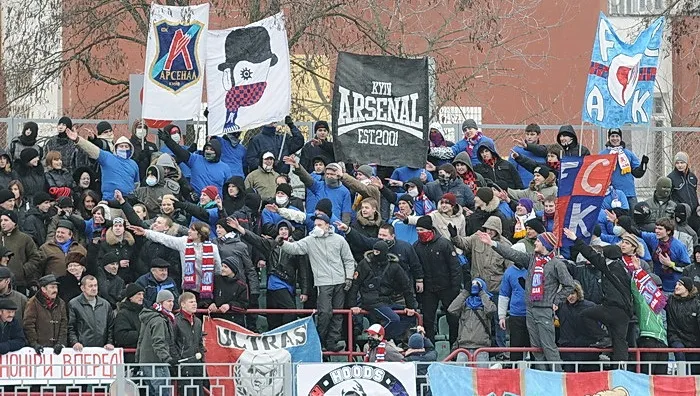
Photo: Илья Хохлов, CC BY-SA 3.0, via Wikimedia Commons
There's a bar in Wicker Park, Chicago, that smells like coffee and nervous energy every Saturday morning before 10 AM. The flat screens are tuned to one channel. The scarves are red and white. And when the Emirates Stadium roars 4,000 miles away, this room roars right back.
This isn't a fluke. It's a movement.
Over the past decade, Arsenal Football Club has quietly — and then not so quietly — built one of the most passionate supporter communities in the United States. The numbers back it up: Arsenal consistently ranks among the top Premier League clubs in American social media engagement, merchandise sales, and official supporter club registrations. But statistics only tell part of the story. The real picture is painted in early mornings, in group chats, in watch parties, and in something harder to quantify — identity.
So how did a club from North London become a cultural touchstone for American sports fans who, in many cases, had never set foot in England?
The Gateway Drug: Beautiful Football
Ask any American Arsenal fan when they got hooked, and you'll usually hear one of two things: either they stumbled onto the club during the Invincibles era, or they were drawn in by the Arsène Wenger brand of fluid, attacking football that made highlights worth watching even if you barely understood the offside rule.
"I grew up watching basketball," says Marcus, a 34-year-old supporter from Atlanta who runs a local Arsenal supporters group. "The way Arsenal moved the ball — the creativity, the pace — it felt like basketball to me. It clicked immediately."
That comparison to basketball isn't accidental. American sports culture prizes athleticism, flair, and individual brilliance within a team framework. Arsenal, especially during the Wenger years and now under Mikel Arteta's high-press system, delivers exactly that. It's not grind-it-out football. It's expressive, sometimes infuriating, always watchable football — and for American fans raised on the NBA and college sports culture, that hits differently.
The Social Media Accelerant
If beautiful football was the spark, social media was the gasoline.
Around 2012-2015, Arsenal's presence on platforms like Twitter, Facebook, and later Instagram exploded. The club's digital team was ahead of the curve in creating content that resonated globally — not just with traditional English supporters, but with younger, digitally native fans in the US who were discovering the Premier League through streaming services and highlight reels.
YouTube channels dedicated to Arsenal analysis. Reddit threads breaking down Arteta's tactical shifts. TikTok accounts posting Bukayo Saka skill compilations. The infrastructure for American fandom built itself organically, powered by fans who were passionate enough to create content for free.
"The internet made geography irrelevant," says Priya, a 28-year-old supporter from Austin who moderates a popular Arsenal Discord server with over 2,000 US-based members. "I've never been to London. I've never been to a match at the Emirates. But I talk to Arsenal fans every single day. The community is real — it just exists online."
Watch Party Culture: Making the 7 AM Kickoff Worth It
One of the biggest challenges for American fans is the time difference. A 3 PM kickoff at the Emirates is a 10 AM start on the East Coast, 7 AM on the West Coast. For mid-week European fixtures, it gets even more brutal.
But rather than being a barrier, the early morning tradition has become a badge of honor — and a community builder.
In cities like New York, Los Angeles, Houston, and Seattle, Arsenal supporter clubs have turned weekend watch parties into genuine cultural events. Bars that open at 7 AM for Arsenal matches report some of their highest-energy Saturday crowds of the week. The combination of coffee, camaraderie, and collective anxiety creates an atmosphere that, regular attendees will tell you, is unlike anything else in American sports fandom.
The American Outlaws — the US Soccer supporter group — helped normalize this kind of early-morning, pub-based soccer fandom. But Arsenal's US supporter clubs have taken it further, organizing charity events, jersey drives, and local soccer clinics that extend the community beyond the 90 minutes.
The Player Factor: Stars Who Translate
Fandom doesn't exist in a vacuum. It needs faces, stories, and personalities to latch onto.
Arsenal has delivered. Thierry Henry became a legitimate American sports celebrity during his time with the New York Red Bulls, introducing a generation of MLS fans to his Arsenal legacy. The signing of players like Alexis Sánchez and Mesut Özil gave the club a global, multicultural identity that resonated in the US's diverse sports landscape.
And then there's the current squad. Bukayo Saka's rise as one of the best players in the world — a young, humble, incredibly skilled winger who carries himself with quiet confidence — has made him a particular favorite among American fans. His story of homegrown development feels relatable in a way that connects across cultures.
"Saka plays like a combination of a young Kobe and a young LeBron," Marcus says, only half-joking. "He's got the skill and the work ethic and the personality. American fans get that."
Demographics: Who Are Arsenal's American Fans?
The demographic picture of Arsenal's US fanbase is genuinely fascinating. Unlike some Premier League clubs whose American followings skew heavily toward British expats, Arsenal's stateside community is notably diverse and predominantly American-born.
Anecdotally — and backed by the composition of supporter clubs in major cities — Arsenal's US base includes a significant proportion of Black American and Latino fans, demographics that have historically been underrepresented in soccer fandom but are now among the sport's fastest-growing audiences in the country. The club's attacking, expressive style and its multicultural squad seem to resonate particularly well with these communities.
The age range is also telling. While older fans remember the Wenger era, a substantial portion of Arsenal's US following is under 35 — fans who grew up with the Premier League as a mainstream product and chose Arsenal specifically, rather than inheriting support from a family member.
What Comes Next
With Arsenal back among Europe's elite — genuine title contenders, Champions League regulars, and a squad built around young, exciting talent — the conditions for continued US growth couldn't be better.
The club's pre-season tours in the United States have drawn massive crowds. Merchandise sales continue to climb. And the community infrastructure that passionate fans built over the past decade is now mature enough to sustain and grow itself.
For supporters like Priya in Austin and Marcus in Atlanta, the growth isn't just exciting — it's validating.
"People used to give you a look when you said you were an Arsenal fan in America," Priya says. "Like, why that team? Now they get it. Now they're asking where they can watch the next match."
Welcome to the revolution. It starts at 7 AM, with a coffee and a scarf, in a bar that smells like possibility.
Come on, you Gunners.