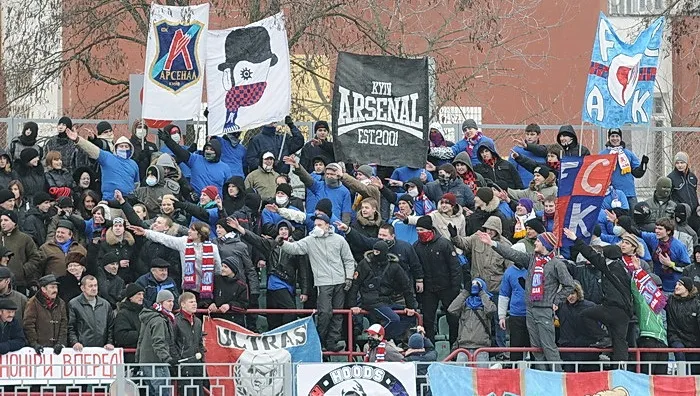
The Blueprint in Red: Why American Soccer Players Are Looking to Arsenal to Launch Global Careers

Photo: Okero Nyagaka, CC BY-SA 4.0, via Wikimedia Commons
Grow up playing soccer in the United States today and you're operating in a different world than the one that existed even ten years ago. MLS academies are more sophisticated. College programs are more competitive. And for the first time in the sport's American history, there's a genuine, well-worn trail leading from youth soccer in the States to professional contracts in Europe's top leagues.
At the center of a lot of those conversations — in training facilities, in coaches' offices, in DMs between ambitious teenagers — is Arsenal.
Not just because of Bukayo Saka, though his trajectory matters enormously. Not just because of the Emirates, though playing there remains a dream for any serious soccer player on the planet. But because of something more specific: Arsenal's development philosophy, its willingness to trust youth, and the way it has built a global identity that resonates with the generation of American players now coming of age.
The Saka Effect Is Real — But It's Bigger Than One Player
Let's start with the obvious. Bukayo Saka is currently one of the best wingers in the world. He came through Arsenal's Hale End academy, made his first-team debut as a teenager, and has since become the heartbeat of one of England's most exciting clubs. He's 23 years old and already has Champions League campaigns, Premier League title races, and an England starting spot on his résumé.
For young American players watching his development, the message is clear: elite European clubs will play you young if you're good enough.
"That's the thing that's changed the conversation," says Coach Darnell Webb, who runs a high-performance soccer academy in Charlotte, North Carolina. "Kids used to think Europe was something you dreamed about after college. Now they see Saka, they see Gavi at Barcelona, they see Pedri — they know the pathway is real and it starts early."
Arsenal in particular has made youth development a cornerstone of its identity under Mikel Arteta. The Spanish manager has shown a consistent willingness to throw young players into high-stakes situations — and more importantly, to stick with them through the rough patches. That reputation travels.
What Arsenal's Academy Actually Offers
Hale End, Arsenal's youth academy based in East London, is widely regarded as one of the best development environments in European football. The club's track record speaks for itself: beyond Saka, the academy has produced players who've gone on to careers across the Premier League and European leagues.
What makes it distinctive isn't just the facilities or the coaching — it's the philosophy. Arsenal's academy emphasizes technical development, positional intelligence, and what they call "the Arsenal way" of playing — a high-tempo, possession-based style that demands both physical and mental sharpness.
For American players, who often arrive in Europe with strong athleticism but gaps in technical refinement, that kind of structured, philosophy-driven environment is exactly what bridges the gap between potential and professional readiness.
"American kids are competitive, they're fit, they work hard — those are givens," says a European-based scout who works across the Premier League and asked not to be named. "What the best academies in England offer is the tactical framework. The positioning. The understanding of space. Arsenal does that particularly well at the youth level."
The Recruitment Pipeline: How American Players Get Noticed
Getting into an academy like Arsenal's from the United States isn't a simple process. There are FIFA regulations around international transfers for youth players that create real logistical hurdles. But those hurdles aren't insurmountable — and more American players are clearing them than ever before.
The pipeline typically runs through a few channels. MLS academies, which have formal and informal relationships with European clubs, are one route. Showcase tournaments — particularly events like the Generation Adidas Cup or various international youth competitions — put American talent in front of European scouts. And increasingly, individual agents and intermediaries are building dedicated networks to connect US-based youth players with European trial opportunities.
Arsenal has participated in this ecosystem, attending US youth tournaments and maintaining relationships with American development programs. The club's growing fanbase in the States has also created a cultural bridge that makes American players more likely to see Arsenal as a destination worth pursuing.
Jordan Tillman, an 18-year-old midfielder from Phoenix who recently completed a trial with a Championship club in England, describes how Arsenal factored into his thinking even before he made the move to pursue a European career.
"I grew up watching Arsenal," he says. "The way they play — the midfield movement, the pressing — it's the style I wanted to develop. Even if I'm not at Arsenal, the way they play has influenced how I think about the game. It's a standard."
The Cultural Bridge: Why Arsenal Resonates with American Athletes
There's something worth examining about why Arsenal specifically — rather than, say, Manchester City or Chelsea — has become a reference point for American players and their families.
Part of it is the club's underdog-with-class narrative. Arsenal has spent the better part of a decade fighting to return to the elite level, doing it largely through youth development and smart recruitment rather than unlimited spending. That story — working harder and smarter, building something real — resonates with American sports culture in a way that oil-money success stories don't always manage.
Part of it is also the squad's demographic makeup. Arsenal's current first team is remarkably diverse — players from across Europe, Africa, and South America. It reflects the multicultural reality of the United States in a way that feels familiar to American fans and, increasingly, to American players imagining themselves in that environment.
Coach Webb puts it simply: "The kids I train see themselves in Arsenal. That matters more than people realize."
What It Actually Takes to Wear the Red Jersey
For all the inspiration, it's worth being clear-eyed about the difficulty of the pathway. The vast majority of players who dream of Arsenal never get close. The academy is selective. The competition from players across Europe and South America is fierce. And even talented players who do break into elite European environments face enormous adjustment challenges — language, culture, tactical systems, and the sheer pace of professional football.
But the pathway is more real than it's ever been. American players like Christian Pulisic, Weston McKennie, and Tyler Adams have proven that US talent can not only survive but thrive at the highest levels of European club football. They've changed what's possible in the imagination of the next generation.
Arsenal hasn't yet produced an American first-team player. But the club's philosophy, its brand, and its model of youth development have made it a blueprint — a template for what elite development looks like — for American players with serious ambitions.
"The question isn't whether an American can play for Arsenal," says the scout. "The question is whether the right American will put in the work and find the right path. That's always been the question. The difference now is that kids in the US actually believe the answer can be yes."
For a generation of young American soccer players watching Saka run at defenders on Saturday mornings, that belief might be the most important thing of all.
The journey starts here. The destination? Why not the Emirates.