Hale End vs. the Pay-to-Play Pyramid: What Arsenal's Academy Can Teach American Youth Soccer
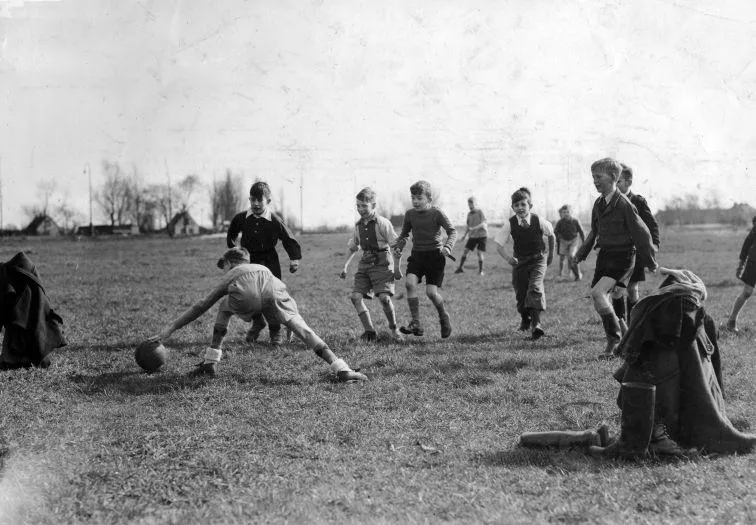
Photo: Nationaal Archief, No restrictions, via Wikimedia Commons
Bukayo Saka joined Arsenal's academy at age seven. He didn't pay to be there. His family didn't write a check for coaching fees, tournament travel, or club gear. Arsenal identified him, brought him in, and invested in his development — because that's what elite academies do.
Now picture the average American youth soccer journey. A promising 10-year-old in suburban Ohio gets spotted by a local club coach. The family is told the kid has real potential — but to play at the top level, they'll need to join the premier travel team. That'll run about $3,000 to $5,000 a year, not counting gear, tournament fees, hotel stays, and the occasional cross-country trip. Welcome to pay-to-play.
The contrast between how Arsenal develops talent and how the United States does it isn't just a soccer conversation. It's a story about access, philosophy, and what a country actually values in its athletes.
What Hale End Actually Is
Arsenal's youth academy, based in Hale End in northeast London, is one of the most respected player development systems in world football. It operates under the Premier League's Elite Player Performance Plan (EPPP), a framework introduced in 2012 that categorizes academies by investment and quality, with Category One being the highest tier. Arsenal holds Category One status — meaning they're held to rigorous standards in coaching, facilities, education, and player welfare.
Kids as young as five can enter the system in what's called the "foundation phase." By the time a player reaches the under-18 setup, they've been immersed in Arsenal's playing style, tactical principles, and professional habits for potentially over a decade. The club covers costs. Players receive elite coaching. And crucially, the system is built around development, not results.
That last part matters more than it might seem.
The American Model: Built Around Winning the Wrong Things
American youth soccer has made genuine strides over the past decade. The launch of MLS Next — the top-tier youth development league connected to MLS academies — has created a legitimate pathway for elite young players that didn't really exist before. MLS academies operate similarly to European ones: no pay-to-play, professional coaching, structured development curricula.
But MLS Next only covers a fraction of American youth players. The majority of serious youth soccer in this country still runs through US Club Soccer and the old USSF Development Academy (now restructured) model, where private clubs dominate. And private clubs, almost universally, charge fees.
The result is a talent pool that's filtered by income before it's ever filtered by ability. Families who can afford $4,000 a year get access to decent coaching and competitive play. Families who can't? Their kids might be playing in a rec league that meets twice a week, coached by a well-meaning parent who played in college twenty years ago.
Arsenal's academy doesn't have this problem. Hale End is funded by the club. Scouts actively seek out talent in underserved communities. The financial barrier to entry is zero.
Coaching Philosophy: Long-Term vs. Right Now
One of the starkest differences between the Arsenal model and American youth development is how coaches think about time.
At Hale End, player development is explicitly a long game. Coaches at the under-9 and under-10 level aren't evaluated on win-loss records. They're evaluated on whether players are improving technically, whether they're enjoying the game, and whether they're developing the decision-making skills that will matter at 17 or 18. Losing a match 4-0 while trying new things is fine. That's the culture.
In American youth soccer, the pressure to win starts embarrassingly early. Travel club coaches are often evaluated — formally or informally — by parents who paid good money and expect results. Tournaments are high-stakes social events. Kids get yanked from positions they need to learn because the coach needs a win this weekend. Technical development gets sacrificed for tactical pragmatism at ages when technical development should be the only thing on the agenda.
US Soccer has recognized this problem and pushed for curriculum changes, particularly through the Coaching Education reforms of the mid-2010s. But cultural change moves slower than policy change.
Recruitment: Casting a Wider Net
Arsenal's scouting network for youth players is extensive. Scouts attend grassroots matches, school competitions, and community programs specifically looking for raw talent that might otherwise go unnoticed. The geographic and socioeconomic reach of that net is a direct result of not needing a financial commitment from the family upfront.
In the US, recruitment at the youth level is largely self-selecting. Parents who know the system, can afford the tryout fees, and have the time to drive their kid to three practices a week are the ones who get their kids in front of top coaches. Talent in low-income communities, rural areas, or among immigrant families who are new to the sport often goes undiscovered — not because it isn't there, but because the infrastructure to find it doesn't exist at scale.
MLS academies are making real inroads here, particularly in cities with strong soccer cultures like LA, Atlanta, and Kansas City. But the country is enormous, and the resources aren't evenly distributed.
What the US Could Actually Borrow
This isn't a piece arguing that American soccer is hopeless — it clearly isn't. The USMNT's young core is genuinely exciting, and players like Christian Pulisic, Gio Reyna, and Yunus Musah have proven that elite American talent can compete on the world stage. But the system that produced them was, in each case, partly European.
Here's what American youth soccer organizations could realistically take from the Arsenal model:
1. Decouple development from revenue. The most impactful change would be expanding MLS academy-style, fee-free development to more clubs and more regions. This requires investment — from MLS, from US Soccer, from corporate partners — but the talent return would be significant.
2. Reframe how coaches are evaluated. Win rates at the U10 level should be irrelevant. Player development metrics — technical proficiency, positional understanding, engagement — should drive coaching accountability.
3. Build longer scouting pipelines. Programs that actively seek talent in underserved communities, rather than waiting for families to find them, would dramatically expand the talent pool.
4. Extend the development window. Arsenal doesn't panic if a 16-year-old isn't ready. American clubs often cut players who don't show early returns. Late developers — and there are many — get left behind.
The Gap Is Real, But It's Closable
Arsenal's academy is one of the best in the world because it was designed to be. It has the funding, the philosophy, and the patience to develop players over years, not months. American youth soccer isn't there yet — but the infrastructure, the interest, and the talent base all exist.
The question is whether the organizations running American youth development are willing to prioritize the right things. Because if the goal is to produce the next Bukayo Saka — and it should be — the current model isn't going to get us there on its own.