Follow the Money: What Happens to Your $100 When You Buy an Arsenal Kit in America
Every summer, the same ritual plays out across the United States: a new kit drops, the group chat debates the design, and thousands of American Gooners face the same three-way fork in the road. Buy official? Hunt a deal? Grab the $30 bootleg from the guy outside the festival?
Nobody really talks about where that money actually goes. So let's follow it.
The Official Route: Where Your Benjamins Actually Land
Buy a current-season home shirt direct from the club or a major US retailer and you're looking at roughly $100 before taxes and shipping — more once you add a name set and the badge patches. So where does it go?
A large slice goes to the manufacturer — the kit supplier — which pays the club an enormous annual sum for the privilege of making and selling that shirt. The club's cut flows into the commercial revenue pool, which, under Premier League financial rules, directly affects what the club can spend on players. Then there's retail overhead, import duties, and the licensing chain. The actual factory cost of the garment? A fraction of the sticker price.
Is that a scandal? Not exactly — it's the modern football economy. But it's worth knowing that your kit purchase is, functionally, a contribution to the transfer budget. American fans have gotten very good at rationalizing this.
The Resale Game and the Retro Gold Rush
Between the official drops lives a thriving secondary market, and it's split into two camps. First, the deal-hunters: patient shoppers who wait for end-of-season sales, outlet finds, and discount codes, landing last year's kit at half price. Totally rational. We salute you.
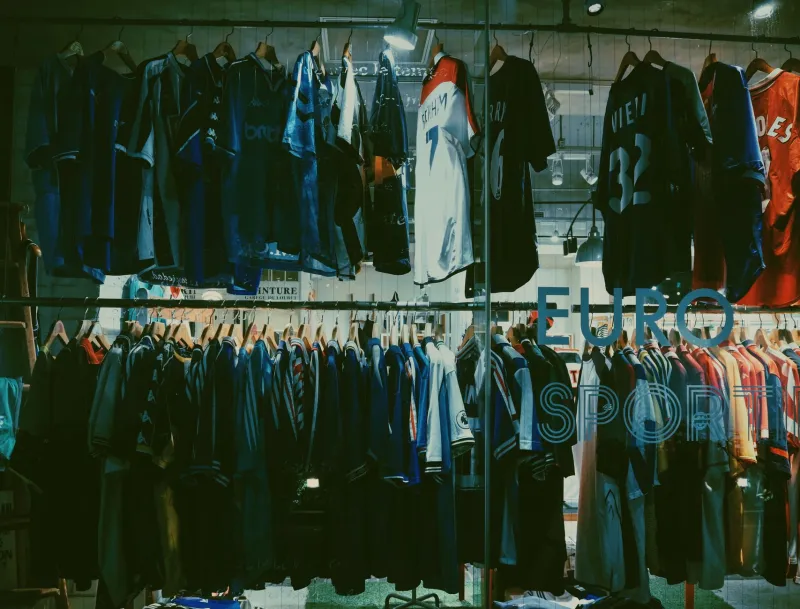
Then there's the collectors. Retro kit culture has exploded stateside over the last few years — 90s shirts with the big collars, classic away designs, the pieces that never got a proper US release. Prices for iconic vintage Arsenal shirts have climbed accordingly, with rare sizes and seasons commanding serious money on resale platforms. What started as a nostalgia niche is now a genuine collector economy, and American buyers are a huge part of the demand driving it.
The Bootleg Question
And then there's the third option everyone pretends not to see. The bootleg kit — cheap, often visually close-but-not-quite, sold at street fairs and sketchy online storefronts. It funds no club, no manufacturer, and frequently no one you'd want to be funding.
We're not here to lecture. But it's worth saying plainly: the bootleg isn't a victimless bargain, and the quality gap is real — those shirts fade, peel, and pill within a season. The official kit, worn for years, often costs less per wear than three knockoffs. That's the honest math.
Why American Spending Hits Different
Here's the part US fans should internalize: you're not a small market anymore. North America is one of the biggest commercial engines in world football, and clubs — Arsenal very much included — plan around it. Preseason tours, US-focused sponsorship deals, drop times scheduled for American time zones, stateside retail partnerships. None of that happens unless American fans keep buying.
Which means the collective spending power of the US fanbase isn't just consumption — it's leverage. Clubs notice where the revenue comes from. Every official kit sold in America is a data point in the argument that the US market deserves tours, content, access, and investment.
Buy Smarter, Not Just Harder
A few practical takeaways for the American Gooner:
- Time your purchase. Official kits rarely get discounted mid-season, but end-of-season sales are predictable and deep.
- Watch the drop calendar. New releases land in summer; buying at launch costs full price but guarantees sizing.
- Verify before you buy resale. The retro market is full of fakes. Learn the tags, the stitching, the fonts.
- Remember what you're funding. An official purchase supports the club you watch every weekend. That's not nothing.
The kit is the uniform of the community — the thing that makes a stranger in an airport feel like family. Just go in knowing what your money's doing. That's not cynicism. That's being a smart fan.