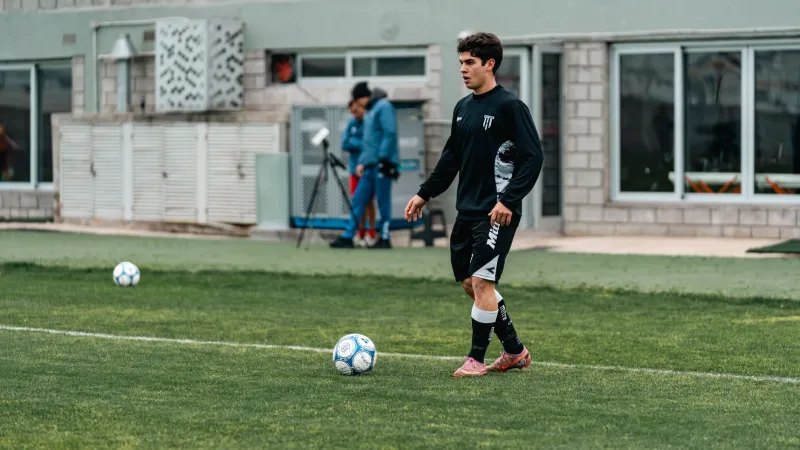
Three Screens and a Prayer: Confessions of the Multitasking Matchday American
Photo: Staff Sgt. James Selesnick, Public domain, via Wikimedia Commons
Here's my Saturday, and be honest, it's yours too: Match stream on the TV. Laptop open to a stats tracker. Phone in hand, split between the group chat and — depending on the month — a transfer rumor feed that I have no rational reason to check during an actual match.
Ten a.m. kickoff, West Coast coffee, East Coast brunch. And somewhere in the noise, Arsenal is playing football.
What We Gained (And It's Not Nothing)
Let's not pretend the old way was pure and the new way is rot. The multitasking matchday has made American Gooners genuinely smarter fans than the ones who watched in 2005 on a delayed Fox Soccer Channel broadcast with a staticky stream and zero context.
We know the pressing triggers. We can spot a midfield pivot change within ten minutes. The group chat functions as a distributed coaching staff — someone always catches the tactical tweak, someone else has the xG dashboard, someone with too much time on their hands has already found the opposing left-back's weakness on Twitter.
That's real. The collective viewing experience of the group chat is the modern equivalent of the terraces: 40 people reacting in real time, arguing, celebrating, and keeping each other honest. I've had entire friendships deepened by a well-timed "WE ARE SO BACK" text.
What We Quietly Lost
But here's the thing I keep coming back to: I cannot tell you the last time I watched a full match — the whole match — with nothing else in front of me.
And I think something happens to a fan when the game becomes background noise for the content about the game. The emotional arc flattens. When you're refreshing a live blog, you're consuming the match as information. When you're just watching, you're feeling it. Those are different sports, almost.
The FPL layer is the sneakiest thief. I have caught myself — actually caught myself — mildly disappointed when Saka scored because he's in my rival's fantasy lineup. That's not fandom. That's portfolio management. If a 19-year-old wonderkid rifling one into the top corner produces a flicker of ambivalence in you because of fantasy points, the game has slipped somewhere it shouldn't go.
The 10am Problem
There's also something uniquely American about the whole setup. Our kickoffs are breakfast kickoffs. The 10am slot means we're watching before work, before errands, before life — multitasking isn't just a habit, it's a necessity. The match competes with a Saturday that's already half-planned.
English fans get the 3pm ritual. We get the second monitor between a hardware store run and a kid's birthday party. The culture of attention we've built around Arsenal isn't a moral failure — it's an adaptation to a schedule that was never built for us.
A Modest Proposal
I'm not going to tell you to smash your phone and become a monk. But I've started running an experiment this season: one match a month, screens down. TV, the match, and nobody but the actual broadcast commentary. No chat. No stats. No Romano.
The first time felt like withdrawal. The second time, I noticed things — the way Rice scans before he receives, the small argument between two players after a misplaced pass, the sound of 60,000 people inhaling at once.
Here's my honest take: the multitasking Gooner is a smarter fan and a shallower one, simultaneously, and which one wins is a choice you make every Saturday at 10am. The group chat will be there. The transfer window is 31 days long. Saka only gets so many more seasons.
Watch the game. The rest can wait 90 minutes. Probably.